
Table of Contents
Quick Summary for Hyderabad Decision-Makers (2026)
Key Takeaways: Rent vs Buy in Hyderabad (2026 Outlook)
- Buying favors long-term residents (5+ years):
- Property prices appreciating at 10–12% annually
- Ownership becomes financially superior after 5–7 years when factoring appreciation, tax savings, and equity creation
- Property prices appreciating at 10–12% annually
- Hyderabad stands out among Indian metros:
- Average rental yield at 3.88% (highest among major metros)
- Strong rent + capital growth combination strengthens the buy case
- Average rental yield at 3.88% (highest among major metros)
- High-growth micro-markets reinforce buying logic:
- HITEC City
- 54% rental growth and 62% capital appreciation (2021–2024)
- 54% rental growth and 62% capital appreciation (2021–2024)
- Gachibowli
- 62% rental growth and 78% capital appreciation in the same period
- 62% rental growth and 78% capital appreciation in the same period
- HITEC City
- Significant tax advantages for homeowners:
- Up to ₹3.5 lakh per year in tax benefits on a ₹50 lakh home loan
- Interest deduction + principal repayment materially improve ownership economics
- Up to ₹3.5 lakh per year in tax benefits on a ₹50 lakh home loan
- Why buying wins after break-even:
- Capital appreciation compounds annually
- Monthly EMIs build equity, unlike rent
- Tax savings reduce effective ownership cost
- Rent payments face opportunity cost with no asset creation
- Capital appreciation compounds annually
- Renting still makes sense if you value flexibility:
- Professionals with high job mobility
- Buyers unable to manage 60–65% upfront cost (down payment + registration)
- Individuals prioritizing lifestyle flexibility over long-term wealth building
- Professionals with high job mobility
- Bottom-line insight:
- There is no universal right answer
- The rent vs buy decision depends on:
- Time horizon
- Financial capacity
- Career stability
- Lifestyle priorities
- Time horizon
- There is no universal right answer
What Does the Rent vs Buy Analysis Actually Measure?
Rent vs buy analysis compares the total cost of renting versus buying a property over a specific timeframe, factoring in not just monthly payments but appreciation, tax benefits, maintenance, opportunity costs, and lifestyle flexibility.
The analysis answers: “After accounting for all costs and benefits, which option leaves me financially better off?” This requires looking beyond simplistic EMI-versus-rent comparisons to comprehensive financial modeling including property appreciation offsetting purchase costs, tax deductions reducing effective EMI burden, equity building through loan principal payments, rental investment returns on money not tied in down payment, and maintenance and transaction costs often overlooked in purchase decisions.
A proper rent vs buy decision framework evaluates three dimensions simultaneously: financial returns, risk exposure, and lifestyle alignment, recognizing that the “best” choice balances all three based on individual circumstances.
The Hyderabad Context: Why the City Offers Unique Advantages
| Factor | Hyderabad Position | National Comparison | Impact on Rent vs Buy |
| Rental Yield | 3.88% average | National average 2.9% | Buying generates better income |
| Property Appreciation | 10-12% annually (IT corridors) | Mumbai 5-6%, Bangalore 8-10% | Wealth building favors ownership |
| Affordability | ₹5,500-8,500/sq ft (HITEC City) | Bangalore ₹6,500-12,000/sq ft | Lower entry barrier to ownership |
| Rental Growth | 11.5% Q-o-Q (Q2 2025) | Mumbai 19.4%, Chennai 11.2% | Rents rising but still manageable |
| IT Job Growth | 58,000+ jobs added (2023) | Bangalore 75,000+, Pune 45,000+ | Employment stability supports both |
| Price-to-Rent Ratio | 20-25 years | Mumbai 40+, Bangalore 30+ | Ownership recovers costs faster |
Why Hyderabad’s Math Favors Buying
Hyderabad currently boasts an average rental yield of 3.88%, surpassing the national average of 2.9%. This means purchased properties generate better income relative to their cost compared to other metros, a fundamental advantage for ownership.
Appreciation Context: Between the end of 2021 and the close of 2024, HITEC City saw rental values grow by 54%, while capital appreciation soared by 62%. In Gachibowli, rental values spiked by 62%, with capital values rising even higher at 78%. Capital growth consistently outpacing rental growth strongly favors buying over renting for wealth creation.
Affordability Edge: Property prices in Hyderabad remain 30-40% lower than Bangalore for comparable locations, making ownership accessible to more people. A ₹70 lakh 2BHK apartment in Hyderabad’s Gachibowli would cost ₹1-1.2 crore in Bangalore’s Whitefield, this price differential dramatically affects rent vs buy calculations.
The Financial Breakdown: Renting vs Buying in Numbers

Scenario: 2BHK Apartment in Gachibowli
Purchase Price: ₹75 lakh (1,100 sq ft @ ₹6,800/sq ft)
Monthly Rent: ₹25,000
Buying Scenario
Down Payment (20%): ₹15 lakh
Home Loan: ₹60 lakh @ 8.75% interest for 20 years
Monthly EMI: ₹53,000
Annual Maintenance: ₹36,000 (₹3,000/month)
Property Tax: ₹12,000 annually
Tax Benefits (Annual):
- Section 80C (Principal): ₹1.5 lakh deduction
- Section 24(b) (Interest): ₹2 lakh deduction
- Total Tax Savings: ₹1.05 lakh annually (30% tax bracket)
Net Monthly Outflow:
EMI (₹53,000) + Maintenance (₹3,000) + Property Tax (₹1,000) – Tax Savings (₹8,750) = ₹48,250
Appreciation (10% annually):
Year 5 Property Value: ₹1.21 crore
Year 10 Property Value: ₹1.95 crore
Loan Principal Paid (5 years): ₹12.5 lakh
Loan Principal Paid (10 years): ₹28 lakh
Renting Scenario
Monthly Rent: ₹25,000
Annual Rent Escalation: 8% (based on market trends)
Renter’s Insurance: ₹5,000 annually
Maintenance: Typically covered by landlord
Year 1-5 Average Monthly Cost: ₹27,500 (accounting for escalations)
Year 6-10 Average Monthly Cost: ₹36,000
Investment Opportunity:
Down payment saved (₹15 lakh) invested @ 12% (equity mutual funds):
Year 5 Value: ₹26.4 lakh
Year 10 Value: ₹46.6 lakh
Monthly EMI-rent differential (₹48,250 – ₹25,000 = ₹23,250) invested @ 12%:
Year 5 Accumulated: ₹18.3 lakh
Year 10 Accumulated: ₹53.2 lakh
Looking for a Home That Reflects Your Lifestyle?
Discover thoughtfully designed homes by Kura Homes — where timeless architecture, modern comfort, and sustainable living come together.
5-Year Comparison: Rent vs Buy
Buying Outcomes (Year 5)
Property Value: ₹1.21 crore
Loan Outstanding: ₹47.5 lakh
Net Equity: ₹73.5 lakh
Total Spent: ₹28.95 lakh (EMI + maintenance + tax – tax benefits)
Effective Gain: ₹44.55 lakh (equity minus spent)
Renting Outcomes (Year 5)
Total Rent Paid: ₹16.5 lakh
Investments Accumulated: ₹44.7 lakh (down payment + differential investments)
Net Worth Increase: ₹28.2 lakh
Winner at 5 Years: Buying leads by ₹16.35 lakh
10-Year Comparison: Rent vs Buy
Buying Outcomes (Year 10)
Property Value: ₹1.95 crore
Loan Outstanding: ₹32 lakh
Net Equity: ₹1.63 crore
Total Spent: ₹57.9 lakh
Effective Gain: ₹1.05 crore
Renting Outcomes (Year 10)
Total Rent Paid: ₹43.2 lakh
Investments Accumulated: ₹99.8 lakh
Net Worth Increase: ₹56.6 lakh
Winner at 10 Years: Buying leads by ₹48.4 lakh
Key Insight
The longer the holding period, the more dramatically buying outperforms renting in Hyderabad due to consistent appreciation, tax benefits compounding, and rising rents eroding rental advantage over time.
Looking for a Home That Reflects Your Lifestyle?
Discover thoughtfully designed homes by Kura Homes — where timeless architecture, modern comfort, and sustainable living come together.
Break-Even Analysis: When Does Buying Pay Off?
Year 1-3: Renting financially superior. High transaction costs (stamp duty, registration, brokerage totaling 8-10% of property value) and minimal equity building make ownership expensive short-term.
Year 4-5: Approaches break-even. Appreciation, tax savings, and principal reduction start offsetting higher ownership costs.
Year 6+: Buying clearly advantageous. Equity accumulation accelerates, appreciation compounds, and rental costs continue rising while EMI remains fixed.
Critical Threshold: For Hyderabad specifically, ownership becomes financially superior after 5-6 years assuming:
- 10% annual appreciation
- 8% rental escalation
- Stable job enabling EMI payments
- Tax bracket enabling full benefit utilization
If planning to stay less than 5 years, renting typically makes better financial sense. Beyond 7 years, buying becomes strongly favorable unless extraordinary circumstances apply.
Beyond Numbers: Lifestyle and Life Stage Factors
When Renting Makes Sense
Job Mobility and Career Exploration:
- Professionals in 20s-early 30s exploring career paths
- Industries with frequent relocation (consulting, sales, hospitality)
- Individuals considering job changes, higher education, or relocations
- Startup employees with uncertain company futures
Insufficient Financial Capacity:
- Unable to afford 20% down payment without depleting emergency funds
- Income insufficient for comfortable EMI payments (exceeding 40% of take-home)
- Job security concerns making long-term debt risky
- Need to preserve capital for business investments or other priorities
Flexibility Preference:
- Desire to experience different neighborhoods before committing
- Preference for upgrading or downsizing based on life changes
- Avoiding landlord responsibilities (tenant issues, maintenance, legal matters)
- International relocation possibilities within 3-5 years
Market Timing Concerns:
- Belief that property prices are near peak and may correct
- Waiting for interest rate reductions before committing
- Observing specific neighborhood development before investing
When Buying Makes Sense
Long-Term City Commitment:
- Established career in Hyderabad with 7-10+ year horizon
- Family roots and social networks in the city
- Children’s education requiring residential stability
- Retirement planning focused on Hyderabad
Financial Readiness:
- 20-30% down payment available without compromising emergency funds
- EMI under 40% of household income allowing comfortable payments
- Stable employment with 3+ years job continuity
- Tax bracket (20-30%) enabling significant benefit utilization
Wealth Building Priority:
- Forced savings discipline through EMI structure
- Real estate as core wealth accumulation strategy
- Intergenerational asset transfer planning
- Rental income potential for future passive income
Lifestyle Preferences:
- Freedom to customize and renovate living space
- Security of owning versus landlord uncertainty
- Building community connections in owned neighborhood
- Psychological satisfaction of ownership
Location-Specific Rent vs Buy Considerations
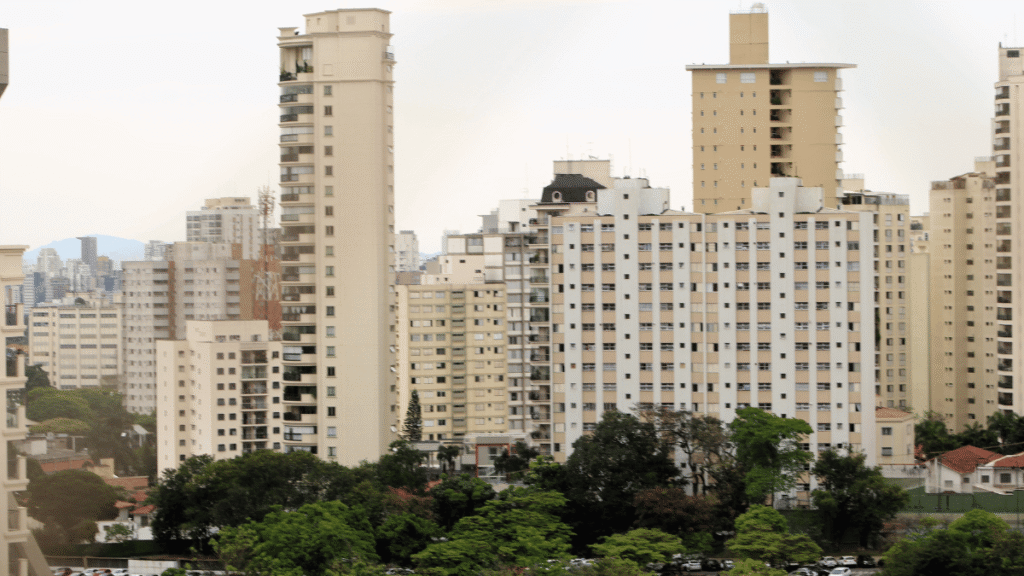
HITEC City and Gachibowli
Property Prices: ₹6,500-9,500/sq ft
Rental Yields: 4-5%
Appreciation: 10-12% annually
Analysis: Strong buy case for long-term holders. IT-centric locations such as Gachibowli, HITEC City, and Kondapur offer particularly strong rental yields of 4-5%. High appreciation plus strong yields create wealth-building opportunities. However, entry prices rising fast, act quickly or face affordability challenges.
Rent: If job at IT company with uncertain longevity or considering career pivot, renting provides flexibility without locking capital.
Kokapet and Financial District
Property Prices: ₹7,000-10,000/sq ft
Rental Yields: 3.5-4.5%
Appreciation: 12-15% annually (highest in Hyderabad)
Analysis: Premium locations with explosive growth. Buying recommended for high-income professionals with 10+ year horizons. Strong capital appreciation offsets moderate rental yields.
Rent: For those new to Hyderabad evaluating whether Financial District commute suits lifestyle, renting initially makes sense before committing to high property prices.
Kondapur and Miyapur
Property Prices: ₹5,000-7,500/sq ft
Rental Yields: 4-6%
Appreciation: 8-10% annually
Analysis: Sweet spot for first-time buyers. Affordable entry with solid yields and steady appreciation. Strong tenant demand from IT workforce ensures rental income if needed.
Rent: Only if planning sub-5 year stay or awaiting promotions enabling luxury segment purchases later.
Shamshabad and Tukkuguda
Property Prices: ₹3,500-5,500/sq ft
Rental Yields: 3.5-4.5%
Appreciation: 10-15% annually (emerging market)
Analysis: High-risk, high-reward. Long commutes to current IT hubs but strong industrial growth. Buy only if believing in 10+ year vision and airport corridor development.
Rent: Almost universally recommended unless working in immediate area. Infrastructure incomplete; renting until metro and roads mature reduces risk.
The Hidden Costs Often Overlooked
Ownership Costs Beyond EMI
Transaction Costs (One-Time):
- Stamp Duty: 5-6% (₹4.5 lakh on ₹75 lakh property)
- Registration: 1% (₹75,000)
- Legal Fees: ₹25,000-50,000
- Brokerage: 1-2% (₹75,000-1.5 lakh)
- Loan Processing: ₹15,000-30,000
- Total Initial: ₹6.5-8 lakh (8.5-10.5% of property value)
Recurring Annual Costs:
- Society Maintenance: ₹2-5 per sq ft monthly (₹26,000-66,000/year for 1,100 sq ft)
- Property Tax: ₹10,000-15,000
- Repairs and Upkeep: 1-2% of property value (₹75,000-1.5 lakh)
- Home Insurance: ₹8,000-12,000
- Total Annual: ₹1.2-2.5 lakh
Exit Costs (When Selling):
- Brokerage: 1% (₹1.2 lakh on ₹1.2 crore sale)
- Capital Gains Tax: 20% with indexation on profits
- Legal and Documentation: ₹30,000-50,000
Renting Costs Beyond Monthly Rent
Security Deposit: 6-10 months rent (₹1.5-2.5 lakh) locked for tenancy duration
Brokerage: 1 month rent (₹25,000)
Rental Escalation: 8-10% annually eroding budget predictability
Renter’s Insurance: ₹5,000-8,000 annually
Moving Costs: ₹15,000-30,000 every 2-3 years
Opportunity Cost: Security deposit and brokerage could earn ₹15,000-20,000 annually if invested, effectively adding to rental cost.
Looking for a Home That Reflects Your Lifestyle?
Discover thoughtfully designed homes by Kura Homes — where timeless architecture, modern comfort, and sustainable living come together.
Tax Implications: The Ownership Advantage
Tax Benefits for Homeowners
Section 80C (Principal Repayment): Deduction up to ₹1.5 lakh annually on principal payments. For 30% tax bracket, saves ₹45,000 yearly.
Section 24(b) (Interest Payment): Deduction up to ₹2 lakh annually on home loan interest. Saves ₹60,000 yearly (30% bracket).
Section 80EEA (First-Time Buyers): Additional ₹1.5 lakh interest deduction for affordable housing (property value under ₹45 lakh). Saves ₹45,000 yearly.
Total Annual Tax Savings: ₹1.05-1.5 lakh depending on eligibility, reducing effective EMI burden by ₹8,750-12,500 monthly.
Rental Income Tax (If Leasing): “Income from House Property” allows 30% standard deduction on rental income plus property tax deductions, reducing taxable rental income significantly.
Tax Implications for Renters
HRA Exemption: Salaried individuals can claim House Rent Allowance exemption as the least of:
- Actual HRA received
- 50% of salary (40% for non-metros, but Hyderabad qualifies as metro)
- Rent paid minus 10% of salary
Example: Salary ₹10 lakh, HRA ₹3 lakh, Rent ₹3 lakh annually:
- Actual HRA: ₹3 lakh
- 50% salary: ₹5 lakh
- Rent – 10% salary: ₹2 lakh
- Exemption: ₹2 lakh (saves ₹60,000 in 30% bracket)
Key Difference: Ownership tax benefits (₹1.05 lakh) significantly exceed renting tax benefits (₹60,000), creating ₹45,000 annual advantage for buyers, ₹4.5 lakh over 10 years.
2026-Specific Market Dynamics
Interest Rate Environment
Home loan rates averaging 8.5-9% in early 2026 are moderately high but stable. RBI projections suggest potential rate cuts in H2 2026 if inflation moderates, potentially reducing EMI burden by 5-8% for new borrowers.
Strategy: If buying, consider floating rate loans benefiting from potential future cuts. If renting, waiting 6-12 months for rate reductions could improve affordability, but risk property price appreciation offsetting savings.
Supply-Demand Balance
Hyderabad’s residential launch pipeline strong in 2026 with multiple projects in Kokapet, Financial District, and peripheral corridors. Increased supply may moderate price growth to 8-10% from historical 12-15%, slightly favoring buyers through improved negotiation leverage.
Rental Market: Rental growth is now moderating across metros, driven by infrastructure-led demand rather than broad-based spikes. New rental supply (3% Q-o-Q, 16.3% Y-o-Y) will limit rent increases in coming quarters, potentially extending renting viability.
Policy Environment
Continued RERA enforcement and Affordable Housing Push ensure transparency and protect buyers. Stamp duty structures unlikely to change significantly in 2026, maintaining current cost structures for both options.
Government Focus: Smart Cities Mission and Metro Phase 2 completion improving peripheral connectivity, making farther locations viable for ownership versus central area rentals.
Decision Framework: Rent vs Buy Flowchart
Step 1: Time Horizon
- Staying 0-3 years? → RENT
- Staying 3-5 years? → ANALYZE FURTHER
- Staying 5+ years? → LEAN TOWARDS BUYING
Step 2: Financial Capacity (If Considering Buying)
- Can afford 20% down payment without emergency fund depletion? NO → RENT
- EMI under 40% of household income? NO → RENT
- Stable job with 3+ years continuity? NO → RENT
- All YES? → PROCEED TO STEP 3
Step 3: Lifestyle Preferences
- Prioritize flexibility and career mobility? → RENT
- Want customization freedom and wealth building? → BUY
- Unsure? → RENT INITIALLY, REASSESS IN 12-18 MONTHS
Step 4: Market Timing (If Buying)
- Property prices seem reasonable for target location? YES → BUY
- Expecting significant price corrections? → RENT AND WAIT
- Uncertain? → CONSULT FINANCIAL ADVISOR
Step 5: Tax Optimization
- In 20-30% tax bracket enabling full benefit utilization? YES → BUY
- Lower tax bracket or minimal HRA benefits? → RENT REMAINS VIABLE
Frequently Asked Questions (FAQs)
What is Hyderabad’s price-to-rent ratio?
Hyderabad averages 20–25. This is neutral to buy-friendly, buying works for long-term stays, renting suits short-term plans. (Mumbai: 40+ favors renting; Tier-2 cities: 15–18 favor buying.)
Should I buy now or wait for a 2026 correction?
Trying to time the market usually backfires. Hyderabad’s fundamentals remain strong. Buy when you find the right property at a fair price, not when headlines predict corrections.
How does EMI compare to rent?
EMIs start 40–80% higher than rent, but rents rise while EMI stays fixed. In Hyderabad, rent often exceeds post-tax EMI by Year 8–10, making buying better long term.
What if I relocate within 5 years?
Early exits are costly due to transaction expenses and limited appreciation. If relocation risk is high, renting is safer. If you buy, choose areas with strong rental demand to lease easily.
Is rent money “wasted”?
No, rent buys flexibility. Renting only hurts wealth if you don’t invest the savings. Disciplined renters can build wealth; buyers benefit from forced savings and appreciation.
How do interest rates affect the decision?
Rate changes impact EMI, but long-term appreciation matters more if you’ll stay 10+ years. Floating loans benefit if rates fall; fixed helps if rates rise.
What about down payment opportunity cost?
Short term, renting wins. After 5–7 years, property appreciation, tax benefits, and equity usually outperform investing the down payment separately in Hyderabad.
Can I buy with just 10% down payment?
Risky. Higher EMI, approval challenges, and low safety buffer. Best practice: 20–25% down payment + 6 months EMI emergency fund. Exception only if funds are coming soon.
Conclusion: A Decision Beyond Just Numbers
The rent vs buy decision in Hyderabad 2026 doesn’t yield a universal answer because optimal choices vary based on financial capacity, life stage, career trajectory, lifestyle preferences, risk tolerance, and market timing, factors unique to each individual.
The Financial Case: For those staying 5-7+ years with stable incomes and 20% down payments, buying clearly outperforms renting through appreciation (10-12% annually), tax benefits (₹1-1.5 lakh yearly), and equity accumulation. Hyderabad’s superior rental yield (3.88%) and moderate property prices relative to other metros strengthen the ownership case.
The Lifestyle Case: However, forcing homeownership on individuals with job mobility needs, insufficient financial readiness, or strong flexibility preferences creates stress and potential financial loss. Renting enables career exploration, capital preservation, and lifestyle experimentation, valuable benefits for many, particularly in 20s and early 30s.
The Hybrid Approach: Many Hyderabad professionals successfully adopt hybrid strategies: renting initially (1-3 years) while establishing careers and exploring neighborhoods, accumulating down payments during rental period, buying when confident about long-term Hyderabad commitment (age 30-35), and potentially maintaining rental properties as investment assets later (age 40+).
Key Insight: The strongest predictor of buying success isn’t age, income, or even down payment size, it’s certainty about staying 7+ years in Hyderabad. If you’re confident, buy. If uncertain, rent without guilt. Both are legitimate wealth-building strategies when executed thoughtfully.
Build Your Future with Generational Expertise
Kura Homes brings nearly five decades of Hyderabad real estate experience understanding that home decisions are deeply personal journeys, not just financial transactions. Whether you’re ready to buy your first property or still exploring the city through renting, our commitment to quality construction, transparent practices, and customer-centric design ensures that when you do choose to buy, you’re investing in a home built to serve your family for generations.
Explore ownership opportunities backed by trust and timeless quality. Connect with Kura Homes today.
Disclaimer: Financial calculations, appreciation rates, and rental yields reflect 2025-2026 Hyderabad market data and may vary based on specific locations, properties, and individual financial circumstances. Past market performance does not guarantee future returns. This analysis provides educational information, not personalized financial advice. Prospective buyers and renters should assess their unique situations, verify current market rates, and consult qualified financial advisors before making housing decisions.