Table of Contents
Key Takeaways (2026)
- Strong Corporate Influx: 1,600+ Global Capability Centers are driving large-scale employment and long-term housing demand in Hyderabad.
- Massive Job Creation: 90,000–100,000 new high-value jobs expected in 2026, led by global majors like Google, Uber, and Southwest Airlines.
- Resilient Tech Market: Hyderabad posted 41.5% growth in IT job openings, outperforming the national trend of declining job opportunities.
- Rising Housing Demand: Corporate-led migration triggered a 25% spike in property registrations (Nov 2025), signaling strong buyer confidence.
- Attractive Rental Yields: Premium micro-markets are delivering 4–6% rental yields, especially for 3 BHK configurations.
- Broad-Based Growth: Demand spans budget, mid-segment, and luxury housing, reducing risk concentration for investors.
- Long-Term Investment Potential: Sustained office expansion and talent inflow position Hyderabad as India’s fastest-growing tech-driven real estate market going into 2026.
What Defines Corporate Relocation in Hyderabad?
Corporate relocation in Hyderabad refers to the strategic movement of multinational companies, Global Capability Centers, technology firms, and Fortune 500 enterprises establishing or expanding operations in the city. This encompasses office space absorption, employee migration, housing demand generation, and infrastructure development driven by business expansion.
Unlike traditional commercial expansion, Hyderabad’s corporate relocation trend is characterized by large-scale commitments exceeding 100,000 sq. ft. per company, multi-year employment generation plans, and integrated ecosystem development combining residential, commercial, and social infrastructure.
Looking for a Home That Reflects Your Lifestyle?
Discover thoughtfully designed homes by Kura Homes — where timeless architecture, modern comfort, and sustainable living come together.
Global Capability Center Boom Driving Migration
1,600+ GCCs Planning Hyderabad Operations
According to recent industry data reviewed by real estate developers, close to 1,600 Global Capability Centres are planning to set up operations in Hyderabad. This represents an unprecedented wave of corporate investment that will fundamentally transform the city’s employment and real estate landscape over the next five years.
GCCs differ from traditional IT services companies. These are strategic offshore centers established by global enterprises to handle mission-critical functions including research and development, financial technology, data analytics, cybersecurity, artificial intelligence, product engineering, and business process operations.
Why Global Companies Choose Hyderabad
Talent Pool Availability: Hyderabad produces over 900,000 IT professionals from 1,500+ technology companies, creating the largest concentrated tech workforce outside Bangalore. The city’s literacy rate of 83% ranks first in India for human resource development, ensuring continuous talent supply.
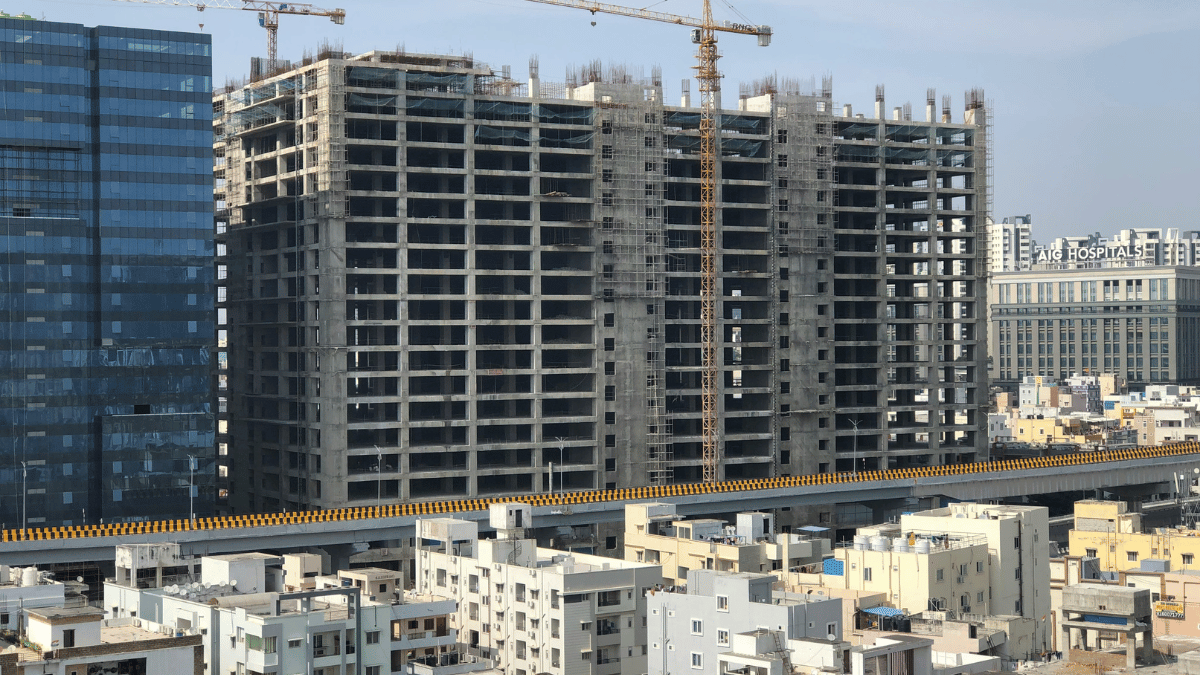
Infrastructure Maturity: HITEC City, Financial District, Gachibowli, and Kokapet offer world-class office parks with Grade-A specifications, high-speed connectivity, and integrated amenities that meet global corporate standards.
Cost Competitiveness: Operating costs in Hyderabad remain 20-30% lower than Bangalore and 40-50% lower than Mumbai, allowing companies to achieve superior ROI while maintaining quality standards.
Government Support: The Telangana government provides proactive policy support, fast-track approvals, special economic zone benefits, and infrastructure investments that facilitate corporate expansion.
Major Corporate Relocations Reshaping Hyderabad (2026)
| Company | Office Size | Location | Employment Impact | Focus Areas |
| Uber | 1 million sq. ft. | Meenakshi Eco Park | Large-scale hiring | Fintech, data analytics, cybersecurity, compliance |
| 3.3 million sq. ft. | HITEC City area | 26,000 employees | Engineering, cloud, Google Ads, AI research | |
| Southwest Airlines | 20,000+ sq. ft. (initial) | Sattva Knowledge City, Raidurg | Scaling during 2026 | Aviation IT, digital platforms, operations analytics |
| MSD (Merck) | 300,000 sq. ft. | Phoenix H10, Financial District | Multi-phase expansion | Life sciences R&D, digital health, data science |
| Ernst & Young | 250,000 sq. ft. | Raheja Mindspace | Professional services expansion | Consulting, audit, advisory services |
| Microsoft | Multiple facilities | HITEC City, Gachibowli | 7,000+ employees | Cloud computing, AI, enterprise software |
| Amazon | 1.8 million sq. ft. | Largest global corporate building | 15,000+ employees | E-commerce, AWS cloud expansion |
This corporate concentration creates a multiplier effect. For every direct IT job created, research suggests 2-3 ancillary jobs emerge in retail, hospitality, education, healthcare, and professional services—further amplifying housing demand.
IT Job Growth vs National Trends: Hyderabad’s Exceptional Performance
According to a recent Business Standard report, while IT job opportunities declined by 3.6% nationwide, the city recorded a remarkable growth rate of 41.5% in job openings. This stark contrast positions Hyderabad as India’s most resilient and fastest-growing technology employment market.
Job Growth Drivers
Global Capability Center Expansion: Companies are shifting from cost arbitrage to capability building, establishing strategic centers that handle advanced functions requiring highly skilled professionals.
Export Growth: For FY 2024-25, the export of software services reached over $17 billion, demonstrating Hyderabad’s growing importance in the global technology value chain.
Tech Industry Trajectory: Hyderabad’s tech industry is on a rapid growth trajectory, with IT exports expected to rise from $30 billion to $200 billion annually by 2030—a nearly 7x increase that will require massive workforce expansion and corresponding housing infrastructure.
Salary Competitiveness: The average yearly salary of a full-stack web developer in Hyderabad is $9,639 USD, which is 5 times higher than salaries in other industries in the same city, creating a high-purchasing-power demographic that drives premium housing demand.
Looking for a Home That Reflects Your Lifestyle?
Discover thoughtfully designed homes by Kura Homes — where timeless architecture, modern comfort, and sustainable living come together.
Real Estate Demand Response to Corporate Expansion
Residential Market Surge
Hyderabad’s real estate market has delivered a strong performance, recording a 25% increase in property registrations in November, with a total of 6,923 units registered. This surge directly correlates with corporate expansion and employment growth, demonstrating the strong linkage between job creation and housing absorption.
Rental Market Transformation
The Financial District exemplifies this transformation. Over the past four years, rental appreciation has consistently outpaced the city average, underlining genuine demand. In FY 2024–25 alone, 3BHK rentals rose by 25.7%, pushing yields to 4–6% in many gated communities, compared to Hyderabad’s typical 2–3%.
This rental yield differential makes corporate-adjacent localities exceptionally attractive for investors seeking stable cash flow and capital appreciation.
Micro-Market Performance
| Micro-Market | Primary Drivers | Rental Yield | Price Range (₹/sq. ft.) | Target Buyer Profile |
| Financial District | Google, Microsoft, Amazon, MSD | 4-6% | ₹11,000-₹11,700 | Senior management, expatriates |
| Gachibowli | IT parks, established infrastructure | 3-5% | ₹6,500-₹10,500 | Mid-senior professionals |
| Kokapet | Emerging tech corridor, planned development | 3-4% | ₹9,000-₹17,000 | Mid-level professionals, investors |
| HITEC City | Mature IT hub, legacy companies | 3-5% | ₹8,000-₹12,000 | Working professionals, rental investors |
| Kondapur | Proximity to IT corridor, metro connectivity | 3-4% | ₹6,000-₹9,000 | Young professionals, first-time buyers |
| Tellapur | Western corridor expansion, ORR connectivity | 3-4% | ₹5,000-₹8,000 | Mid-segment buyers seeking appreciation |
Migration Patterns: Understanding the Professional Influx
Demographic Profile of Migrating Professionals
Age Group: Predominantly 25-40 years, representing prime earning and home-buying demographics
Income Levels: ₹8-30 lakh annual salary range for mid-level professionals, ₹30-80 lakh for senior management, creating demand across budget to luxury segments
Family Status: Mix of single professionals, young couples, and growing families, requiring 1 BHK to 4 BHK configurations
Geographic Origins: Primary inflow from Bangalore, Mumbai, Delhi NCR, Pune, and tier-2 cities across India, plus international professionals from the United States, Europe, and Southeast Asia
Settlement Patterns
People who come to Hyderabad for work are increasingly settling here permanently. Retirees are also choosing the city due to its quality of life and relative affordability. This shift from temporary migration to permanent settlement amplifies real estate demand as professionals transition from rental accommodation to property ownership.
Initial Rental Phase (0-2 years): New migrants typically rent apartments near workplaces in Gachibowli, Financial District, or HITEC City, driving rental demand and yields.
Home Purchase Phase (2-5 years): After establishing career stability, professionals purchase homes either near IT hubs (premium segment) or in developing corridors (mid-segment) offering better value.
Family Expansion Phase (5+ years): Growing families upgrade to larger homes, gated communities with schools, and neighborhoods offering comprehensive social infrastructure.
Infrastructure as Corporate Relocation Catalyst
Transportation Networks
Metro Rail Expansion: Phase-II metro extensions will connect residential belts to employment centers, reducing commute times and expanding viable housing options for professionals.
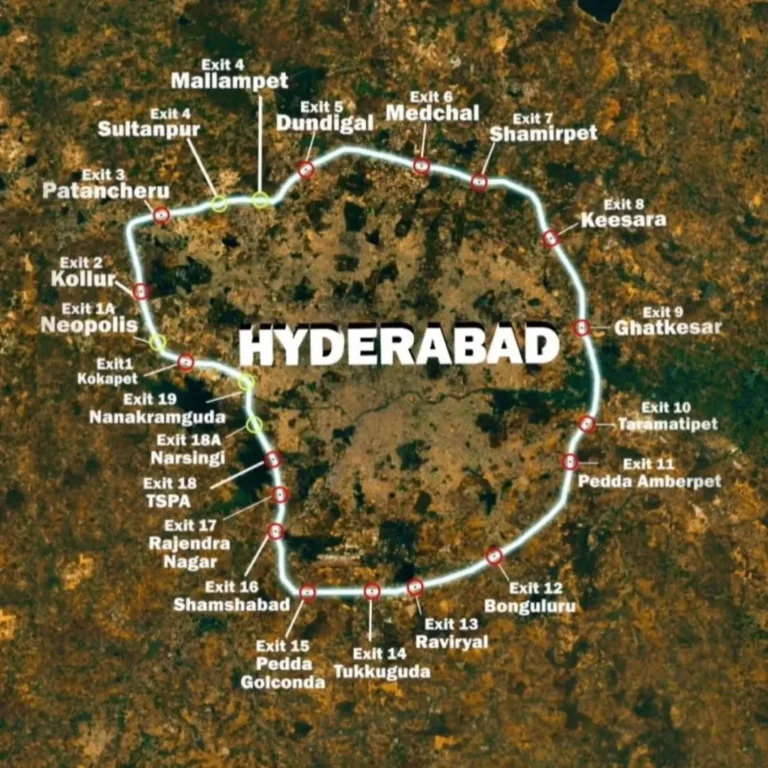
Outer Ring Road Upgrades: Enhanced connectivity along the ORR facilitates development of peripheral residential zones while maintaining accessibility to central business districts.
Flyovers and Underpasses: Over 40+ infrastructure projects have drastically reduced travel time between residential areas and IT hubs, making previously distant localities attractive for homebuyers.
Future City and Regional Ring Road
The Telangana government’s proposed Future City project features integrated zones for manufacturing, sports, green spaces, and residential development. This planned sustainable, net-zero urban hub with metro connectivity will create new employment and housing clusters, extending Hyderabad’s real estate growth corridor.
The Regional Ring Road, when completed, will enable satellite township development 50-70 km from the city center, offering affordable housing options for budget-conscious professionals while maintaining connectivity to employment hubs.
Corporate Relocation Impact: Quantitative Analysis

Employment Generation Projections
Hyderabad is poised to create over 25,000 new high-value jobs in 2026 alone, further cementing its status as one of Asia’s most important global business and innovation hubs.
For the next 3-5 years:
- 90,000-100,000 new jobs expected in Financial District alone
- 1,600+ GCCs generating 150,000-200,000 direct employment opportunities
- 300,000-400,000 ancillary jobs in supporting sectors
Housing Requirement Calculations
Assuming conservative household formation rates:
- Direct IT jobs (200,000) × 0.6 homeownership rate = 120,000 housing units required
- Ancillary sector jobs (350,000) × 0.4 homeownership rate = 140,000 units
- Total new housing demand: 260,000 units over 5 years = 52,000 units annually
This sustained demand base ensures developers maintain construction pipelines and investors benefit from steady absorption rates.
Investment Implications for Different Buyer Profiles
End-User Professionals (Immediate Buyers)
Recommended Locations: Financial District, Gachibowli, Kondapur, HITEC City—proximity to workplace minimizes commute time
Property Type: 2-3 BHK ready-to-move apartments in gated communities with amenities
Budget Range: ₹80 lakh – ₹2.5 crore depending on location and specifications
Key Considerations: Commute time under 30 minutes, quality schools within 5 km, proximity to hospitals and shopping centers
Rental Income Investors
Recommended Locations: Financial District, Kokapet, Gachibowli—high rental yields of 4-6%
Property Type: 3 BHK apartments in premium gated communities targeting senior management
Budget Range: ₹1.5 crore – ₹3 crore
Expected Returns: 4-6% rental yield + 8-12% capital appreciation = 12-18% total annual returns
Long-Term Capital Appreciation Investors
Recommended Locations: Tellapur, Kompally, Bachupally, Narsingi—emerging corridors with infrastructure development
Property Type: 2-3 BHK apartments or plotted developments
Budget Range: ₹60 lakh – ₹1.2 crore
Expected Returns: 10-14% annual appreciation over 5-7 year holding period
NRI Investors
Recommended Locations: RERA-approved projects in Financial District, Gachibowli, Kokapet
Property Type: Premium 3-4 BHK apartments in managed communities with professional property management
Budget Range: ₹1 crore – ₹4 crore
Key Advantages: Transparent regulations, strong rental demand, luxury residential options, high rental potential (4-6%)
Looking for a Home That Reflects Your Lifestyle?
Discover thoughtfully designed homes by Kura Homes — where timeless architecture, modern comfort, and sustainable living come together.
Challenges and Risk Factors
Infrastructure Strain
Overcrowding in IT-dominant regions is straining Hyderabad’s urban infrastructure, highlighting the need for sustainable planning and enhanced facilities to support the city’s growing population.
Traffic congestion during peak hours (8-10 AM, 6-8 PM) on major corridors remains a challenge, though metro expansion and flyover projects are gradually alleviating pressure.
Affordability Pressures
Rising property prices in IT-centric areas like Gachibowli and Madhapur are creating affordability challenges, making it difficult for middle-income buyers to enter the market.
This affordability gap is pushing budget buyers toward peripheral zones (Kompally, Bachupally, Uppal) where commute times increase but entry prices remain accessible.
Market Volatility Risks
While Hyderabad demonstrates greater stability than Bangalore or Mumbai, corporate relocation-dependent markets face concentration risk. Economic downturns, layoffs in technology sectors, or shifts in corporate strategy could temporarily dampen demand.
However, the diversification across 1,600+ companies in IT, pharmaceuticals, life sciences, financial services, and manufacturing provides greater resilience than single-sector dependency.
How Legacy Builders Address Migration-Driven Demand
Companies with multi-decade track records understand that corporate migration creates specific housing requirements: timely delivery for professionals with job start dates, quality construction meeting urban expectations, transparent processes for time-constrained buyers, and amenity-rich communities supporting modern lifestyles.
Kura Homes, established in 1976 by Sri Kura Satyanarayana Reddy, brings 49 years of construction expertise to Hyderabad’s evolving market. The company’s three-generation legacy demonstrates consistent adherence to timely delivery and customer-centric design—qualities that matter most to migrating professionals making rapid housing decisions.
Projects like Speed Signature Towers (Nizampet) and Sanarelli Apartments (Bowrampet) reflect Kura Homes’ understanding that modern homebuyers—whether relocating for corporate opportunities or upgrading within the city—prioritize proven builders who deliver on commitments.
Current leadership under Kura Baladitya Sena Reddy and Kura Ruthvika Reddy continues the family’s commitment to quality construction and transparent processes, offering the assurance that corporate migrants need when making quick yet significant property investment decisions in an unfamiliar city.
For professionals relocating to Hyderabad’s growing employment corridors, builders with established reputations and multi-decade delivery records provide the foundation for confident homeownership.
Future Outlook: 2026-2030 Projections
Employment Growth Trajectory
Based on current corporate expansion announcements and GCC formation trends:
- 2026: 25,000 direct jobs + 50,000 ancillary jobs
- 2027: 30,000 direct jobs + 60,000 ancillary jobs
- 2028-2030: 120,000 direct jobs + 240,000 ancillary jobs
Cumulative 5-year impact: 200,000+ direct IT/corporate jobs, 400,000+ total employment creation
Real Estate Demand Projections
Residential Units Required (2026-2030): 250,000-300,000 units across all segments
Commercial Office Space: Additional 30-40 million sq. ft. Grade-A office space
Rental Market: Sustained rental yields of 3-6% depending on location and property configuration
Price Appreciation: 8-12% CAGR in established corridors, 12-18% in emerging zones with infrastructure development
Geographic Expansion Patterns
Western Corridor (Gachibowli-Financial District-Kokapet): Premium segment growth, continued corporate concentration, sustained rental demand
Eastern Corridor (Uppal-Ghatkesar-LB Nagar): Budget-to-mid segment expansion, metro connectivity driving residential development
Northern Corridor (Kompally-Bachupally-Miyapur): Mid-segment growth, family-oriented communities, long-term appreciation
Southern Corridor (Tukkuguda-Adibatla-Shamshabad): Emerging employment zones, airport proximity, long-term investment opportunities
FAQs: Corporate Relocations and Real Estate in Hyderabad
Q1: How do corporate relocations impact Hyderabad real estate prices?
Corporate relocations create sustained housing demand from high-earning professionals, driving both rental yields (4-6% in premium areas) and capital appreciation (8-12% annually in established corridors). Areas within 30 minutes of major employment centers experience the strongest price impact.
Q2: Which Hyderabad localities benefit most from IT company expansions?
Financial District, Gachibowli, Kokapet, HITEC City, and Kondapur benefit most from corporate expansions due to proximity to employment centers. These areas command premium pricing (₹6,500-₹17,000 per sq. ft.) and offer superior rental yields (3-6%) compared to peripheral zones.
Q3: Is Hyderabad’s real estate market dependent on IT sector performance?
While IT drives significant demand, Hyderabad’s economy is diversified across pharmaceuticals, life sciences, financial services, manufacturing, and government operations. The presence of 1,600+ Global Capability Centers across multiple industries reduces single-sector dependency risk.
Q4: What rental yields can investors expect in corporate-adjacent areas?
Rental yields range 3-6% depending on location and property type. Financial District offers 4-6% for premium 3 BHK units, Gachibowli provides 3-5%, and emerging corridors like Kokapet and Tellapur offer 3-4% with higher capital appreciation potential.
Q5: How many jobs will corporate relocations create in Hyderabad by 2026?
Projections indicate 25,000+ high-value direct jobs in 2026 alone, with cumulative 200,000+ direct IT/corporate jobs and 400,000+ total employment opportunities (including ancillary sectors) over the 2026-2030 period.
Q6: Are there risks in investing in corporate migration-dependent areas?
Concentration risk exists—economic downturns or technology sector layoffs could temporarily dampen demand. However, diversification across 1,600+ companies in multiple sectors (IT, pharma, finance, manufacturing) provides resilience. End-user driven markets like Hyderabad show lower volatility than speculative markets.
Q7: What property types do relocating professionals prefer?
Professionals prefer 2-3 BHK ready-to-move apartments in gated communities with amenities including clubhouses, gymnasiums, swimming pools, children’s play areas, and 24/7 security. Proximity to workplaces (under 30 minutes commute) and quality schools are key decision factors.
Q8: How does Hyderabad compare to Bangalore for corporate relocations?
Hyderabad offers 20-30% lower operating costs, less traffic congestion, superior infrastructure planning, and more affordable housing (30-40% cheaper than equivalent Bangalore localities). While Bangalore has larger startup ecosystems, Hyderabad attracts established companies seeking cost efficiency and quality of life.
Q9: Should I buy property before or after corporate announcements?
Early investment in infrastructure growth corridors before corporate announcements offers higher appreciation potential (15-20%+ in 3-5 years). However, this carries higher risk. Post-announcement purchases in established areas offer lower risk and moderate appreciation (8-12% annually) with stronger rental yields.
Q10: What infrastructure projects will most impact real estate values?
Metro Phase-II expansion, Outer Ring Road upgrades, Airport Metro Express, Future City development, and Regional Ring Road will create new growth corridors and enhance connectivity. Properties within 2 km of upcoming metro stations show 15-25% higher appreciation rates.
Q11: How do I verify if a project is suitable for rental income from corporate tenants?
Check proximity to major employment centers (under 5 km ideal), verify RERA registration and builder track record, assess amenities (furnished units rent 15-20% higher), confirm bank loan approvals, and review neighborhood corporate tenant concentration through local brokers.
Q12: What is the future of Hyderabad’s corporate relocation trend?
The trend will strengthen through 2030 as GCC formations accelerate, IT exports target $200 billion annually (from current $17 billion), government infrastructure investments continue, and quality of life advantages attract companies from congested metros. Hyderabad is positioned as India’s most stable corporate expansion destination.
Final Verdict: Corporate Migration as Fundamental Demand Driver
Corporate relocations are not a temporary trend—they represent structural transformation of Hyderabad into India’s premier Global Capability Center destination. The influx of 1,600+ GCCs, 200,000+ high-value jobs over five years, and continued infrastructure investments create a sustainable real estate demand foundation.
For end-user professionals relocating to Hyderabad: Prioritize proximity to employment centers (Financial District, Gachibowli, HITEC City)
Choose RERA-registered projects with timely delivery records
Evaluate total commute time during peak hours before finalizing locations
Partner with established builders who understand migrating professionals’ needs
For investors seeking rental income: Target 3 BHK units in Financial District and Kokapet for 4-6% yields
Focus on gated communities with premium amenities attracting senior management
Verify corporate tenant demand through local broker intelligence
Calculate total returns combining rental yield (4-6%) + appreciation (8-12%)
For long-term capital appreciation investors: Explore emerging corridors (Tellapur, Narsingi, Kompally) ahead of infrastructure completion
Monitor metro expansion and corporate office announcements
Maintain 5-7 year holding periods for optimal appreciation realization
Diversify across micro-markets to reduce concentration risk
Credai Hyderabad expressed confidence that housing demand and prices will remain firm through 2026, driven by migration, job creation, and the city’s growing appeal as a long-term residential destination—a sentiment supported by quantitative data and corporate expansion announcements.
The combination of employment growth, infrastructure development, government support, and quality of life positions Hyderabad as India’s most compelling corporate migration destination and, consequently, one of its most resilient real estate markets.
Ready to Invest in Hyderabad’s Growth Story?
Kura Homes understands that major life transitions—whether relocating for career opportunities or upgrading within the city—require builders who deliver on commitments. With 49 years of construction expertise across Hyderabad’s evolving landscape, we build homes grounded in trust, tradition, and proven technical excellence.
From Speed Signature Towers in Nizampet to Sanarelli Apartments in Bowrampet, our projects demonstrate that legacy-driven construction and timely delivery aren’t exclusive to legacy buyers. Every home we build carries the commitment of three generations serving Hyderabad families since 1976.
Whether you’re a professional relocating to Hyderabad’s thriving corporate ecosystem, an investor seeking rental income from the city’s employment growth, or a long-term buyer targeting emerging corridors, Kura Homes offers the multi-decade track record that informed buyers prioritize when making India’s most significant financial decision.
Connect with Kura Homes today to discover how our family’s five-decade journey can support yours.
📍 Kura Homes
Plot No. 19 & 20, Wahhab Nagar, Sikh Village
Secunderabad, Telangana 500009
Disclaimer: Corporate expansion data, employment projections, and market analysis are based on publicly announced corporate relocations, industry research reports, and real estate market data as of January 2026. Actual outcomes may vary based on economic conditions, corporate strategy changes, infrastructure development timelines, and market dynamics. Investors and homebuyers should conduct independent due diligence, verify RERA registrations, consult financial advisors, and assess personal circumstances before making property investment decisions. Rental yield and appreciation projections are estimates based on historical trends and do not constitute guaranteed returns.